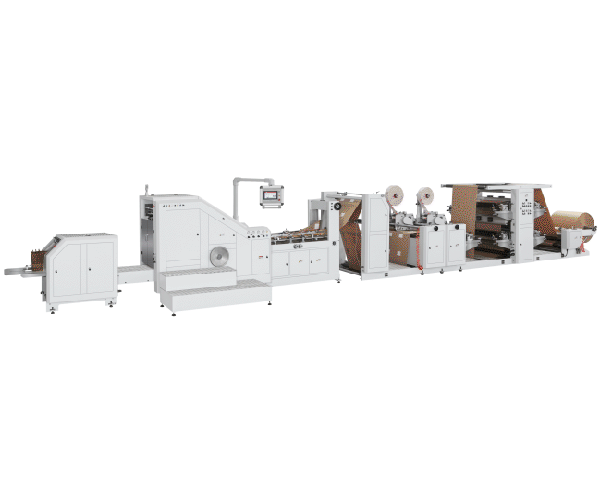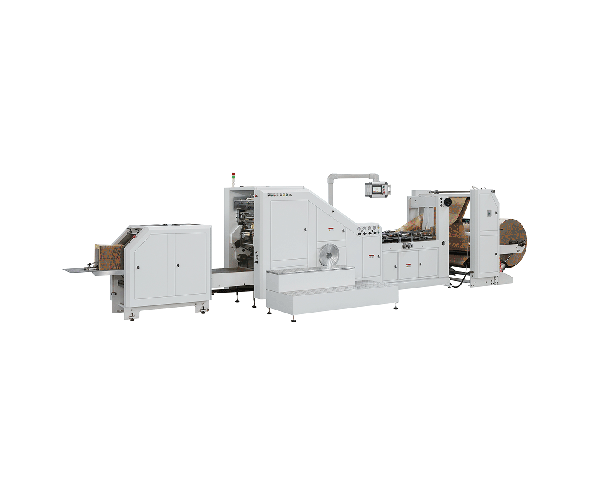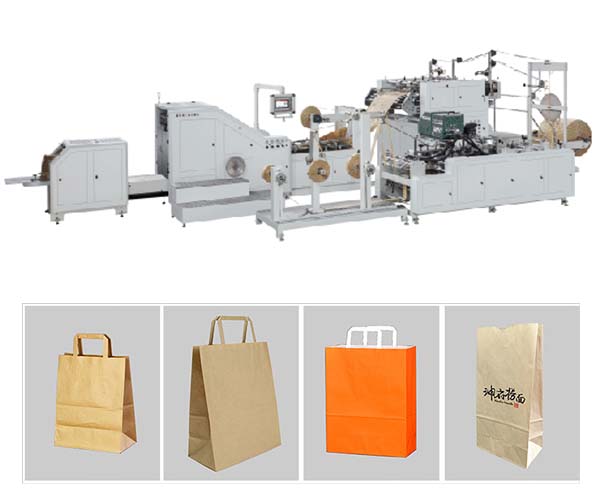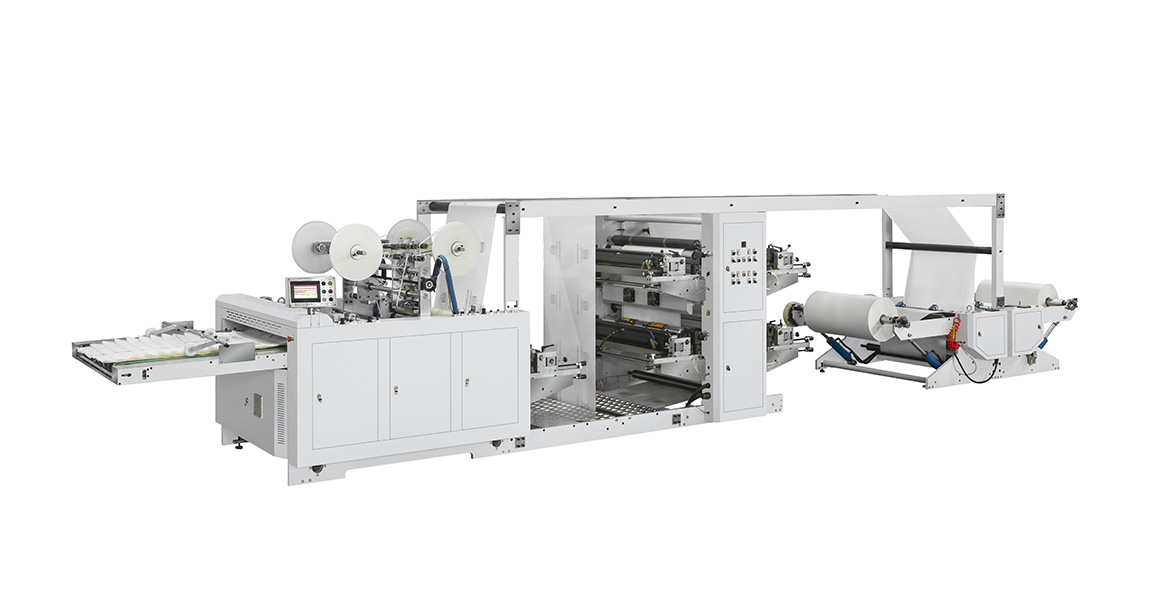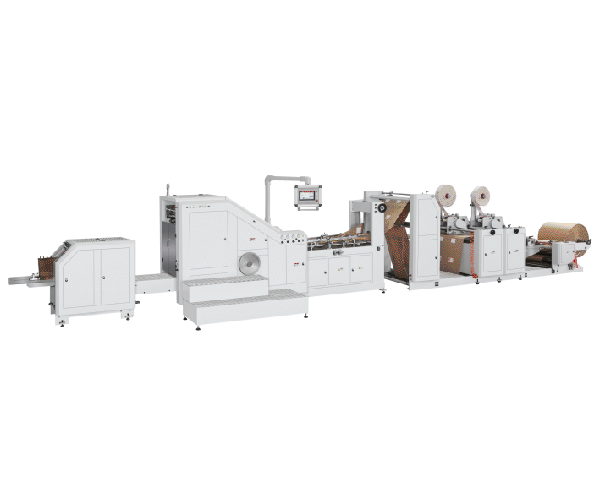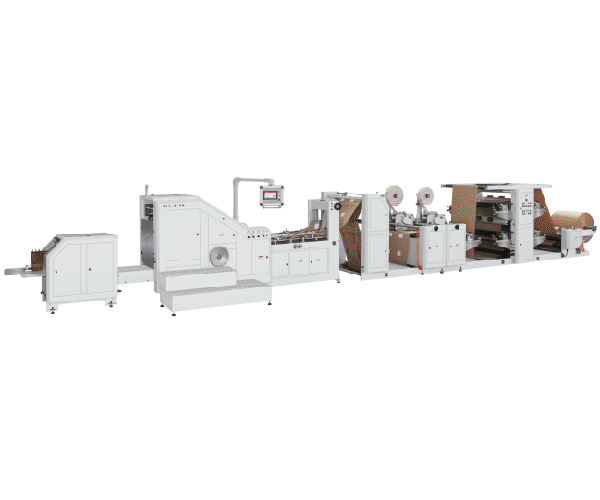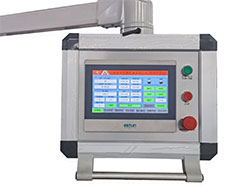
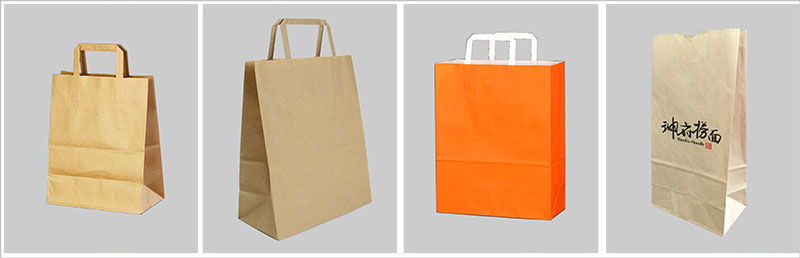
One of the most common operational tasks on a fully automatic paper bag machine is changing the bag size. Whether you are switching from small shopping bags to large retail bags, or adjusting for a new customer order, knowing how to properly adjust bag width, length, and bottom size is essential for maintaining production efficiency and minimizing waste.
The short answer: adjusting bag size on a modern fully automatic paper bag machine involves three main steps—setting the bag width via the forming mould and side guides, configuring the bag length through the touchscreen interface and servo-controlled cutting system, and adjusting the bottom size using the double bottom structure and scoring mechanism. Most adjustments can be made without stopping the machine, thanks to features like the independent servo gluing unit and adjustable dual-mould structure.
This guide walks through each adjustment step in detail, covering both the machine settings and the mechanical adjustments required.
Understanding Bag Dimensions: What You Are Actually Adjusting
Before making any adjustments, it helps to understand the three primary dimensions that define a paper bag:
| Dimension | Symbol | Description |
|---|---|---|
| Bag Width | W | The finished width of the bag (measured across the front panel) |
| Bag Length | L | The finished height of the bag from bottom to top opening |
| Bottom Size | H | The depth or gusset of the bag bottom |
On machines like the LSB-330XL-F, the relationship between these dimensions follows a specific formula: Bag Length (L) = Bag Tube Length (C) − (Bottom Size (H) ÷ 2 + 15 to 25). Understanding this relationship is critical because adjusting one dimension often affects the others.
1. Adjusting Bag Width
Bag width is typically the first dimension you set when changing bag sizes. The width is determined by how the paper web is guided through the forming section of the machine.
What to adjust:
- Forming mould structure: Most fully automatic machines feature an adjustable forming mould structure that determines the width of the finished bag. On the LSB-330XL-F, the forming mould is adjustable, with side sealing positioned above the mould.
- Side guides and paper web alignment: The paper web must be centered and guided correctly through the machine. Double photoelectric sensors help with automatic correction and deviation rectification.
How to do it:
- Loosen the forming mould locking mechanism
- Slide the mould to the desired width setting (refer to the scale or digital readout if available)
- Re-tighten the locking mechanism
- Adjust the side guide plates to match the new web width
- Verify that the photoelectric sensors are detecting the web edges correctly
Typical width ranges on LILIN machines:
- LSB-330XL-F: 200–330 mm (with handle) / 140–330 mm (without handle)
- Other models in the series: 120–330 mm
Tip: Always leave a small margin—the machine specification should be slightly larger than your target dimension to allow for fine adjustments.
2. Adjusting Bag Length
Bag length is controlled through the machine's servo motor system and programmable logic controller (PLC). On LILIN machines, the bag length is set via the human-machine touchscreen interface.
What to adjust:
- Cutting position: The machine cuts the paper tube to the desired length before bottom forming
- Servo motor parameters: The servo motor drives the feeding and cutting with high precision
How to do it:
- Navigate to the bag length setting on the touchscreen interface
- Enter the desired bag length value
- The servo system will adjust the feed and cutting timing accordingly
- Run a few test bags and measure the actual length
- Fine-tune the setting if necessary
Key advantage: On machines with independent servo local gluing units, changing the bag length does not require replacing any rollers—the system automatically synchronizes the gluing speed. This significantly reduces changeover time compared to older mechanical systems.
Length range reference:
- LSB-330XL-F: 450–700 mm tube length (with handle) / 450–820 mm (without handle)
3. Adjusting Bottom Size
Bottom size is adjusted through the bottom-forming section of the machine.
What to adjust:
- Double bottom structure: LILIN machines feature a double bottom structure that can be adjusted without stopping the machine
- Bottom scoring and folding mechanisms: These determine how the bottom is creased and formed
How to do it:
- Access the bottom adjustment mechanism
- Using the "don't stop machine" adjustment feature, modify the bottom size setting while the machine continues running
- The adjustment is made intuitive through the design—on LILIN machines, this process is described as more intuitive, simpler, and more time-saving
- Verify the bottom size by measuring finished bags
Bottom size ranges:
- LSB-330XL-F: 100–210 mm
Quick Reference: Bag Size Adjustment Checklist
Use this checklist when changing bag sizes on a fully automatic paper bag machine:
- ☐ Determine target dimensions: Bag Width (W), Bottom Size (H), and Bag Length (L)
- ☐ Calculate required tube length: L = C − (H ÷ 2 + 15 to 25)
- ☐ Adjust forming mould to new width setting
- ☐ Set side guides to match new web width
- ☐ Enter bag length on touchscreen interface
- ☐ Verify servo parameters are correctly updated
- ☐ Adjust bottom size using double bottom mechanism
- ☐ Run test bags and measure all three dimensions
- ☐ Fine-tune any dimension that is out of specification
- ☐ Save the settings (if the machine supports recipe storage)
Common Mistakes to Avoid
Changing only one dimension without recalculating the tube length. Remember: bag length depends on both tube length and bottom size. Adjusting bottom size without adjusting tube length will change the final bag length.
Forgetting to adjust the glue application. On machines with independent servo gluing units, the glue position and speed automatically synchronize with size changes. But on older or simpler machines, you may need to manually adjust glue roller positions.
Not running test bags. Always run 10–20 test bags and measure them before starting full production. Paper behavior can vary, and minor fine-tuning is almost always needed.
Ignoring paper tension. Changing bag size often requires rechecking the automatic constant tension control system. The tension should remain "just right from beginning to end."
How Modern Features Simplify Size Changes
Modern fully automatic paper bag machines incorporate several features that make size changes faster and easier than ever:
| Feature | Benefit for Size Changes |
|---|---|
| Touchscreen interface | Enter dimensions directly; real-time condition display |
| Servo motor control | Precise, repeatable adjustments; no mechanical parts to change |
| Independent gluing unit | No roller replacement when changing bag length |
| Dual-moulds structure | Quicker adjustment between sizes |
| Stop-free bottom adjustment | Adjust bottom size without stopping production |
| Recipe memory | Save and recall size settings for repeat orders |
These features mean that what once took 90–120 minutes on older machines can now be completed in significantly less time.
Frequently Asked Questions
1. How long does it take to change bag size on a fully automatic paper bag machine?
The time varies by machine model and the complexity of the size change. On modern machines with servo controls, touchscreen interfaces, and adjustable dual-mould structures, a size change can typically be completed in 15–30 minutes. Machines with recipe memory functions can reduce this further.
2. Do I need to stop the machine to adjust the bottom size?
No. LILIN machines feature a "don't stop machine" adjustable double bottom structure, allowing operators to adjust the bottom size while the machine continues running. This saves significant production time compared to machines that require a full stop.
3. What is the formula for calculating bag length?
On LILIN machines, Bag Length (L) = Bag Tube Length (C) − (Bottom Size (H) ÷ 2 + 15 to 25). The 15–25 mm allowance accounts for the bottom fold and overlap.
4. Do I need to change rollers when changing bag length?
No. On machines with independent servo local gluing units, changing the bag length does not require replacing any rollers. The system automatically synchronizes the gluing speed and position.
5. What paper thickness range can the machine handle for different bag sizes?
Most fully automatic handle paper bag machines in the LILIN series handle paper thickness from 60 to 170 gsm. However, actual performance may vary by paper quality, adhesive characteristics, bag dimensions, and operator experience.
6. How do I know if my bag size adjustment is correct?
Run 10–20 test bags and measure the bag width, bag length, and bottom size using a ruler or caliper. Compare measurements against your target dimensions. If they are within tolerance, the adjustment is correct. If not, fine-tune the relevant settings and test again.
Conclusion
Adjusting bag size on a fully automatic paper bag machine is a systematic process that involves three main dimensions: width, length, and bottom size. Modern machines with servo controls, touchscreen interfaces, and adjustable forming moulds make this process faster and more intuitive than ever.
Key takeaways:
- Bag width is set through the forming mould and side guides
- Bag length is controlled via the touchscreen and servo system—no roller changes required
- Bottom size can be adjusted without stopping the machine
- Always run test bags and verify dimensions before starting full production
- Save successful settings if your machine supports recipe memory
Understanding how to efficiently change bag sizes not only reduces downtime but also allows your production line to respond quickly to different customer orders. For a complete overview of available machine configurations, review the fully automatic handle paper bag machine options.
If you are experiencing difficulty with a specific adjustment or need technical support, contact the manufacturer with your machine model and the specific issue you are encountering.