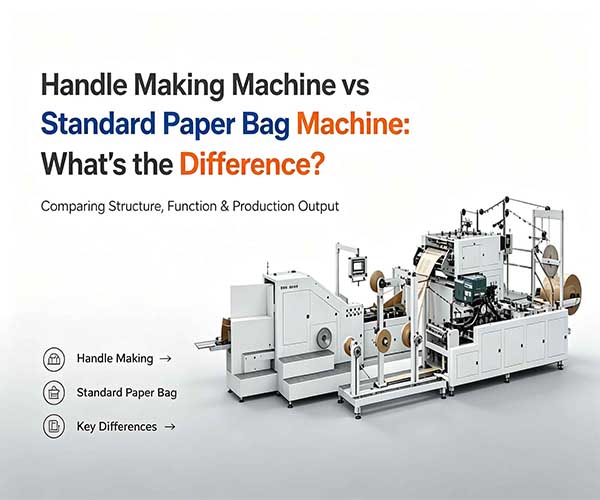
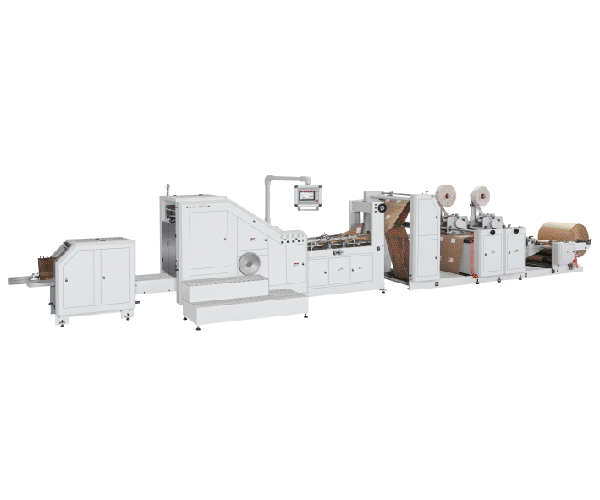
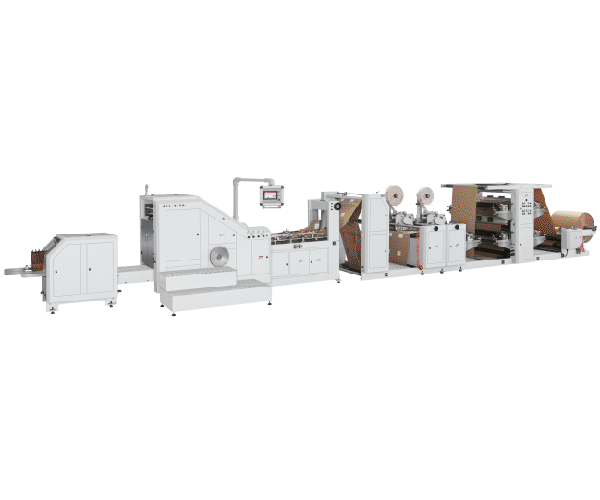
If you are planning a paper bag production line, you may have noticed that suppliers offer several different machine types: handle making machines, standard paper bag machines, and fully automatic handle paper bag machines. The names sound similar, but they produce different things and serve different production models.
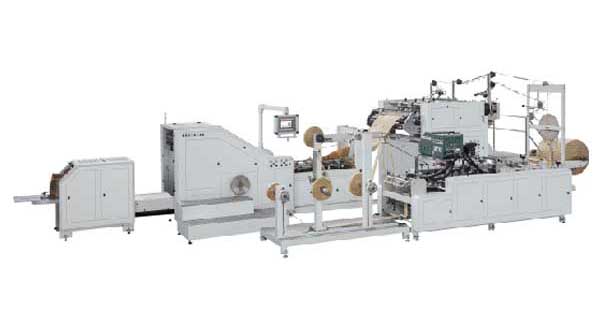
The short answer: a handle making machine produces the handles themselves—flat rope, twisted rope, or paper handles—which are then attached to bags. A standard paper bag machine forms bags but does not make or attach handles. A fully automatic handle paper bag machine combines both functions in one line, producing finished handle bags from roll paper in a single continuous process. The right choice depends on whether you want to make handles for sale, buy handles from a supplier, or produce finished handle bags in-house.
This guide explains the differences and helps you decide which setup fits your production plan.
Defining the Three Equipment Types
Before comparing, it helps to be precise about what each machine actually does.
What Is a Handle Making Machine?
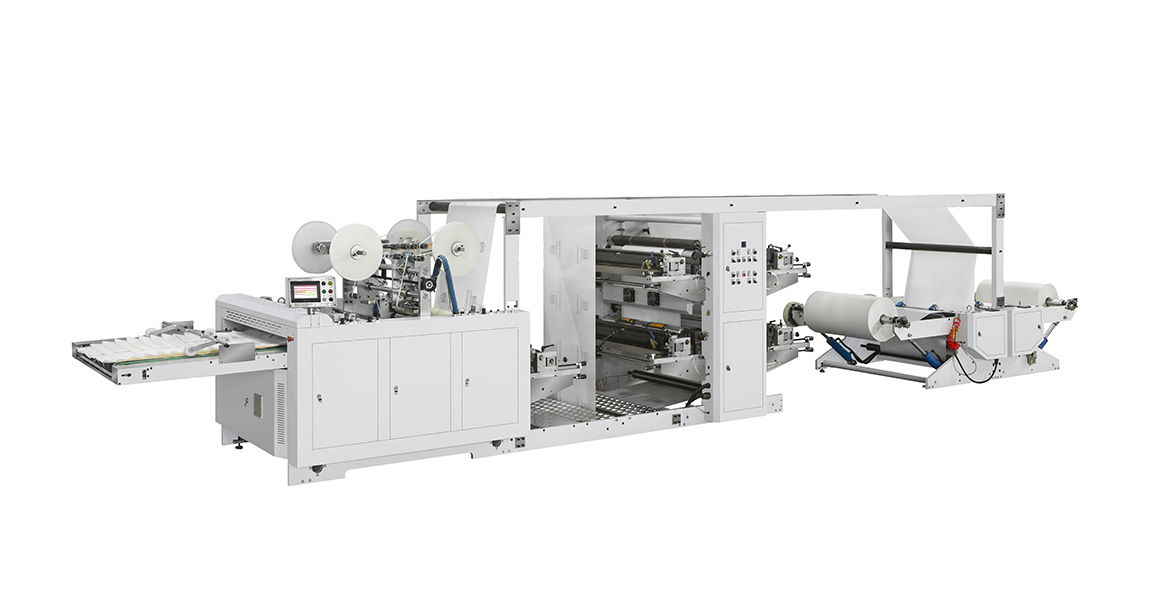
A handle making machine produces the handle component of a paper bag. It takes paper rope, kraft paper, or patch material and forms it into a finished handle that can be attached to a bag.
In the LILIN product range, the paper bag handle making machine category includes models such as the LFP-G flat rope hand winding machine, which sandwiches paper rope between two layers of kraft paper, applies glue, laminates, and cuts the result into individual handles.
Output: handles only, not finished bags.
Typical buyers: handle suppliers, bag factories that want to control handle quality and cost, and operations that sell handles as a separate product.
What Is a Standard Paper Bag Machine?
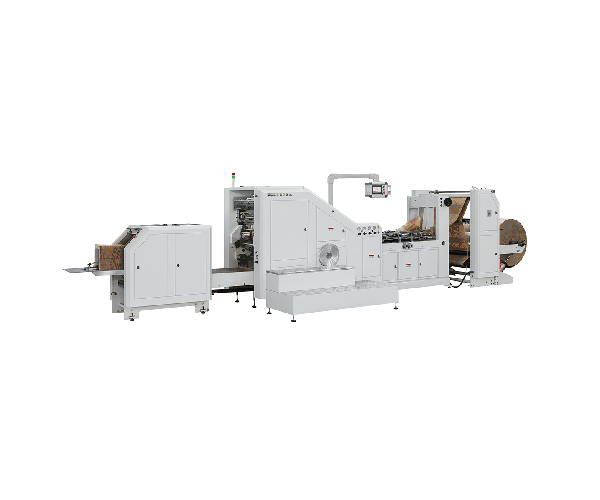
A standard paper bag machine forms paper bags from roll paper but does not produce or attach handles. It is used for bags that do not require handles—such as square bottom bags, V-bottom bags, satchel bags, or three-side sealing bags.
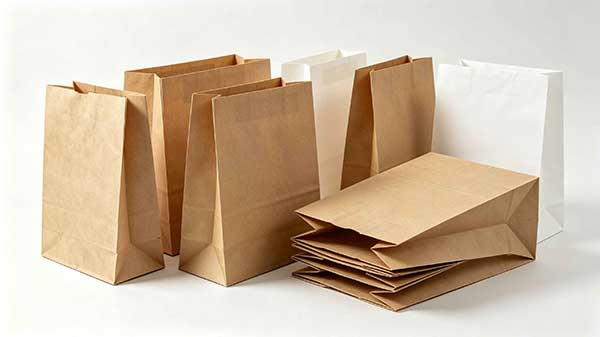
These machines perform tube forming, bottom folding, bottom gluing, and bag cutting. Handle attachment is not part of the process.
Output: finished bags without handles.
Typical buyers: factories producing retail bags, food packaging bags, or bags where handles are not required.
What Is a Fully Automatic Handle Paper Bag Machine?
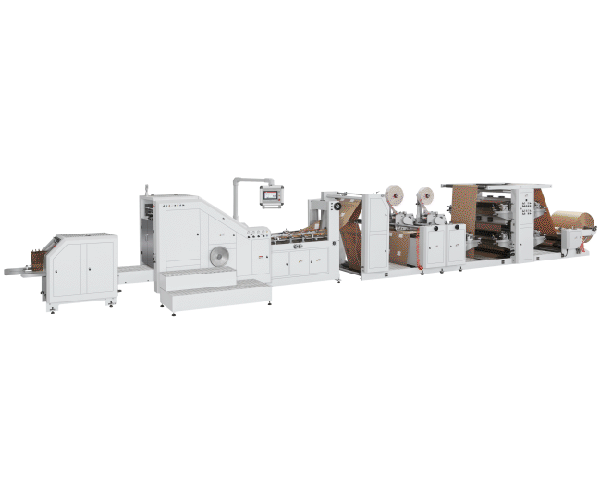
A fully automatic handle paper bag machine combines handle production and bag formation in one line. It produces finished handle bags from roll paper in a single continuous process.
In the LILIN range, the fully automatic handle paper bag machine category includes models such as the LSB-450XLD+TP+LST-41400, which performs partial gluing, patch application, side gluing, roll folding, die-cutting handles, roll paper cutting, bottom folding, bottom gluing, and bottom forming in one pass.
Output: finished handle bags.
Typical buyers: factories producing shopping bags, food service bags, retail bags, and other handle bags at volume.
Side-by-Side Comparison
| Feature | Handle Making Machine | Standard Paper Bag Machine | Fully Automatic Handle Paper Bag Machine |
|---|---|---|---|
| What it produces | Handles only | Bags without handles | Finished handle bags |
| Handle capability | Yes (handle is the product) | No | Yes (integrated handle unit) |
| Raw material | Paper rope, kraft paper, patch material | Roll paper | Roll paper, patch roll, paper rope |
| Typical output | Handles | Bags | Handle bags |
| Production model | Component supplier | Bag producer (no handle) | Integrated bag producer |
| When to choose | You want to make or sell handles | Your bags don't need handles | You want finished handle bags in-house |
When to Choose a Handle Making Machine
A standalone handle making machine makes sense in several scenarios:
- You sell handles as a product. Some factories specialize in producing handles for other bag makers.
- You want to control handle quality. Making handles in-house gives you control over material, glue, and dimensions.
- You already have a standard bag machine and want to add handle capability. Some factories run a standard bag machine and a separate handle machine, then attach handles in a secondary step.
- Your handle volume is high enough to justify a dedicated machine. If you consume large volumes of handles, a dedicated machine may be more economical than buying handles.
Trade-off: you need a separate process to attach handles to bags, which adds labor and handling steps.
When to Choose a Standard Paper Bag Machine
A standard paper bag machine is the right choice when:
- Your bags do not require handles. Many food packaging, retail, and specialty bags are handle-free.
- You want a simpler production line. Fewer components mean simpler operation and maintenance.
- Your bag types vary widely. Standard bag machines can be configured for different bag styles without handle complications.
Trade-off: you cannot produce handle bags on this machine alone.
When to Choose a Fully Automatic Handle Paper Bag Machine
A fully automatic handle paper bag machine is the right choice when:
- You want finished handle bags from roll paper in one process. No separate handle production or attachment step.
- Your production volume is high and consistent. Integrated lines are designed for continuous output.
- You want consistent handle placement and quality. The handle unit is synchronized with the bag-forming process.
- You produce shopping bags, food service bags, or retail bags at scale.
For a closer look at a specific configuration, check the LSB-450XLD+TP+LST-41400 specifications, which lists bag width 260–450 mm, bag tube length 450–820 mm, paper thickness 80–180 gsm, and a maximum speed of 120 pcs/min under optimal conditions.
Trade-off: higher upfront investment and a more complex line compared with a standard bag machine.
Common Misunderstandings
"A handle making machine makes bags." No. It makes handles. Bags are formed on a separate bag machine or on an integrated handle bag machine.
"A standard paper bag machine can add handles later." Some standard machines can be paired with a separate handle unit, but this is not the same as an integrated handle bag machine. The configuration and workflow differ.
"A fully automatic handle paper bag machine is just a standard machine with a handle attachment." In practice, integrated handle bag machines are designed as a single synchronized process, with handle production, patch application, and bag formation controlled together. The LSB-450XLD+TP+LST-41400, for example, uses independent servo units for patch, die-cutting, and gluing.
Decision Checklist
Use this checklist before choosing:
- ☐ Do my bags require handles? (If no, a standard bag machine may be sufficient.)
- ☐ Do I want to make handles for sale, or only for my own bags?
- ☐ What is my expected handle volume per month?
- ☐ Do I already have a standard bag machine that I want to keep using?
- ☐ Do I need flexo printing integrated, or will I buy pre-printed roll paper?
- ☐ What bag dimensions do I need? (Check against machine specifications.)
- ☐ What paper thickness range will I run? (The LSB-450XLD+TP+LST-41400 is listed for 80–180 gsm.)
- ☐ Do I have the technical team to maintain an integrated line?
FAQ
Can a handle making machine produce finished paper bags?
No. A handle making machine produces handles only. Finished bags are produced on a paper bag machine—either a standard bag machine (without handles) or a fully automatic handle paper bag machine.
Do I need a separate handle making machine if I buy a fully automatic handle paper bag machine?
No. A fully automatic handle paper bag machine includes an integrated handle unit. A separate handle making machine is only needed if you want to produce handles as a standalone product or supply handles to other bag makers.
What is the difference between a handle making machine and a paper bag machine with a handle unit?
A handle making machine produces handles as its only output. A paper bag machine with a handle unit produces finished handle bags in one continuous process. The latter is an integrated production line, not a component machine.
Can I add a handle making machine to an existing standard bag machine?
In some setups, a standard bag machine and a separate handle machine can be used together, but handle attachment may require an additional step. Integrated handle bag machines are designed for one-pass production. Buyers should confirm the specific configuration with the supplier.
What paper thickness does a fully automatic handle paper bag machine handle?
It varies by model. For example, the LSB-450XLD+TP+LST-41400 is listed for 80–180 gsm. Buyers should confirm the paper range for the specific model they are considering.
Conclusion
The difference between a handle making machine and a standard paper bag machine comes down to what each machine produces: handles versus bags. A fully automatic handle paper bag machine combines both functions in one integrated line.
Key takeaways:
- Handle making machine produces handles only—suitable for handle suppliers or factories that want to control handle production
- Standard paper bag machine produces bags without handles—suitable for handle-free bag types
- Fully automatic handle paper bag machine produces finished handle bags in one process—suitable for high-volume handle bag production
- The right choice depends on whether you need handles as a product, bags without handles, or finished handle bags in-house
- Verify specifications for bag dimensions, paper thickness, and speed before committing
If you are planning a handle bag production line, review the available fully automatic handle paper bag machine configurations to compare models and specifications.
If you need help matching a machine type to your production plan, contact the manufacturer with your bag type, dimensions, and expected volume.