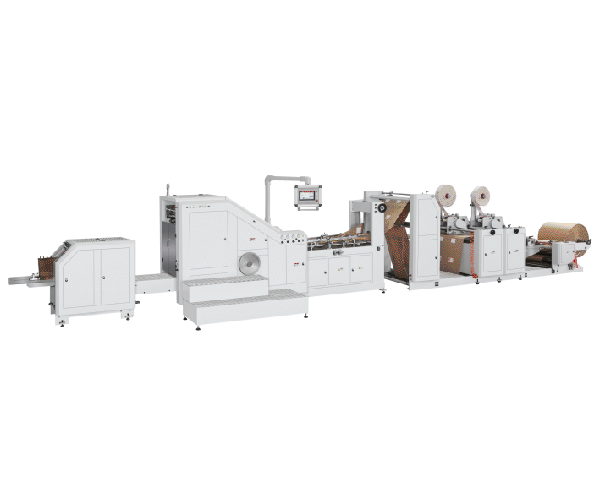
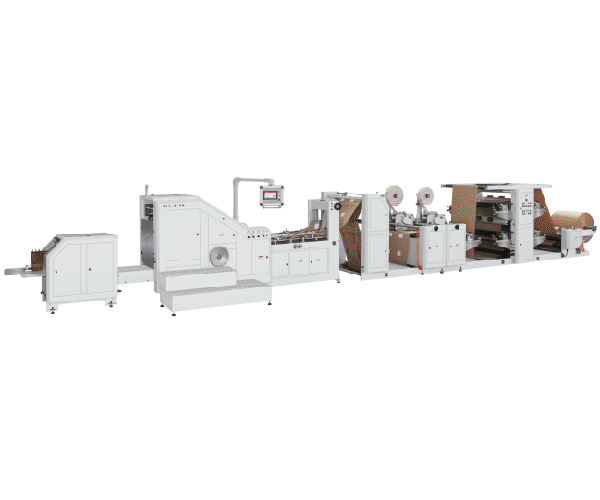
Choosing a paper bag making machine is a significant capital investment. The wrong decision can lead to production bottlenecks, high maintenance costs, and missed delivery deadlines. Whether you are expanding an existing packaging operation or entering the paper bag market for the first time, understanding the key selection criteria will help you make a confident, informed choice.
This guide outlines five essential factors to evaluate when comparing paper bag making machines. These criteria apply across different bag types—including square bottom, handle, and satchel bottom paper bag machines—and are based on real production requirements rather than marketing claims.
Production Speed vs. Production Stability
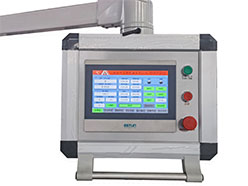
Touch screen interface for real-time production monitoring
Speed is often the first specification buyers look at, but stable speed is more important than maximum speed. A machine rated at 180 bags per minute that frequently jams or produces inconsistent bags will deliver lower effective output than a machine running steadily at 150 bags per minute.
What to evaluate:
- Rated speed vs. effective speed: Ask what speed the machine can maintain consistently over an 8-hour shift, not just peak performance.
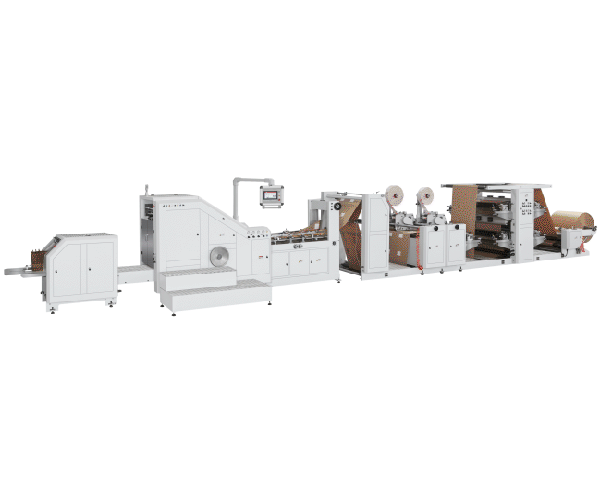
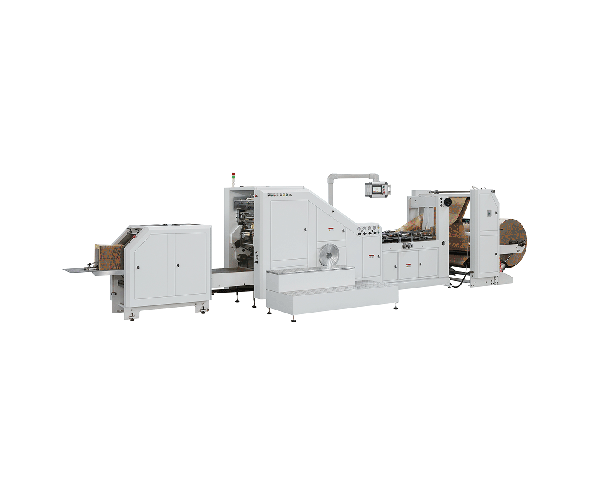
- Control system: Machines with servo motor control systems maintain precision across all axes simultaneously, reducing positioning errors and waste at higher speeds. For example, the LSB-330-F model uses YASKAWA PLC and servo control systems imported from Japan to ensure stable high-speed operation.
- Material dependencies: Machine speed depends on paper quality, adhesive properties, bag dimensions, and operator experience. A specification like "180 pcs/min" is a reference point, not a guarantee for every production setup.
Red flags to watch for:
- Machines that only list maximum speed without mentioning stable operating range
- No information about the control system type
- Unwillingness to discuss speed under different material conditions
Material Compatibility and Flexibility
Paper bag machines process various paper types, grammages, and roll widths. The machine you select must handle the materials you plan to use—both now and in the future.
Key material parameters to verify:
| Parameter | Typical Range | Why It Matters |
|---|---|---|
| Paper thickness | 60–170 gsm | Affects bag strength, printability, and forming quality |
| Paper roll width | 400–1050 mm | Determines maximum bag size capability |
| Max roll diameter | Up to 1200 mm | Impacts how often rolls need to be changed |
| Patch/rope specifications | Handle rope height, width, patch dimensions | Critical for handle-equipped bags |
Flexibility considerations:
- Size changeover time: How long does it take to switch between different bag sizes? Machines with adjustable dual-mould structures and "don't stop machine adjust double bottom structure" can significantly reduce changeover time.
- Bag type versatility: Can the machine produce multiple bag styles? The same machine should accommodate your product mix.
- Material feeding system: Pneumatic or hydraulic lifting structures for material loading and unloading reduce operator strain and improve safety.
Automation Level and Control System
The level of automation directly affects labor costs, operator training requirements, and production consistency. Modern paper bag machines offer varying degrees of automation—from semi-automatic to fully automatic roll-fed systems.
What fully automatic means:
A fully automatic handle paper bag machine performs the complete process from raw materials to finished bags in one continuous operation: handle making, handle application, tube forming, tube cutting, and bottom forming. This eliminates manual intervention between steps and reduces labor requirements.
Control system features to look for:
- Touch screen interface: Allows real-time monitoring of work conditions and simplifies parameter adjustments
- Servo drive system: Provides precise motion control and synchronization between work units
- Automatic tension control: Maintains consistent paper tension from roll start to end, preventing dimensional drift
- Color tracking and registration: Accurate color tracking with automatic alarm for color errors ensures print alignment
- Counting system: Automatic counting with batch ejection improves packing efficiency
Operator skill requirements:
Higher automation does not necessarily mean simpler operation. Consider whether your operators can be trained to use the control system effectively. Machines with intuitive interfaces and clear parameter displays reduce the learning curve.
Maintenance Requirements and Ease of Adjustment
Maintenance costs and downtime are often underestimated during the purchasing process. A machine that is difficult to maintain or adjust will cost more over its lifetime than the initial purchase price suggests.
Design features that reduce maintenance burden:
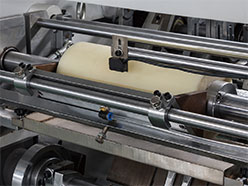
Independent glue coating system with automatic supply
| Feature | Benefit |
|---|---|
| Independent glue coating system | Can run independently after the machine stops, preventing glue from drying and hardening |
| Glue automatic supply system | Automatically supplies glue when insufficient, reducing manual monitoring |
| Overall electric adjustment of pressure roller | Synchronizes paper handle pressing and conveying adjustments, saving separate adjustment time |
| Width-adjustable conveying structure | Adapts to different paper handle widths without replacing parts |
| Double photoelectric sensor correction | Provides stable deviation correction with energy savings and long life |
Questions to ask suppliers:
- What are the recommended maintenance intervals?
- Which parts wear most frequently and how easy are they to replace?
- Is training provided for routine maintenance and adjustments?
- What is the typical response time for technical support?
Total Cost of Ownership
The lowest-priced machine is rarely the lowest-cost machine over its useful life. Total cost of ownership includes purchase price, installation, training, energy consumption, maintenance, spare parts, and downtime costs.
Cost factors to evaluate:
- Energy consumption: Total power ratings vary significantly between models. The LSB-330-F, for example, has a total power of 30 kW—but actual consumption depends on actual operating conditions and utilization rates.
- Waste and scrap rate: Higher precision machines typically produce less waste. Even a 2–3% difference in scrap rate translates to significant material cost savings over time.
- Changeover time: Faster size changes mean less downtime between production runs.
- Spare parts availability: Are critical parts readily available? How long does shipping take?
- Service and support: Does the supplier offer installation support, operator training, and ongoing technical assistance?
A practical approach:
Request a total cost estimate from each supplier covering the first 3–5 years of operation. Compare not just the machine price but the complete package including delivery, installation, training, and a recommended spare parts kit.
Selection Checklist
Before finalizing your paper bag making machine purchase, use this checklist:
- Rated speed confirmed for your specific materials and bag sizes
- Control system type identified
- Paper thickness range matches your production requirements
- Maximum bag size fits your target products
- Changeover time between sizes is acceptable for your production mix
- Maintenance access and intervals are clearly documented
- Total cost of ownership estimated
- Supplier support and training arrangements confirmed
- Spare parts availability and lead time verified
- References from similar production environments available upon request
Frequently Asked Questions
Q: What is the difference between a fully automatic and a semi-automatic paper bag machine?
A: A fully automatic machine performs all production steps—from roll feeding to finished bag output—in one continuous process without manual intervention between stages. Semi-automatic machines require operator assistance for certain steps, such as handle application or bottom folding. Fully automatic machines typically offer higher output and lower labor costs but require a higher initial investment.
Q: How do I determine the right machine speed for my production needs?
A: Calculate your required daily output based on orders and production hours, then add a 20–30% buffer for peak demand. Remember that rated maximum speed is not always achievable with all materials. Discuss your specific material types with the supplier to understand realistic sustained speeds.
Q: What paper types can a paper bag making machine process?
A: Most machines process kraft paper, white card paper, coated paper, and laminated materials within a specified grammage range. Typical ranges are 60–170 gsm. Confirm with the supplier that your intended paper types fall within the machine's specifications.
Q: How often does a paper bag making machine need maintenance?
A: Maintenance frequency depends on operating hours, speed, and material types. Most manufacturers recommend daily cleaning and inspection, weekly lubrication checks, and monthly calibration of critical components. Always refer to the specific maintenance schedule provided by the manufacturer.
Q: Can one machine produce different types of paper bags?
A: Yes, many machines are designed to handle multiple bag styles with adjustments. For example, some machines can produce bags with or without handles, and with different bottom types. However, changeover time varies—machines with adjustable forming mould structures reduce adjustment time for different sizes.
Conclusion
Selecting a paper bag making machine requires balancing multiple factors: speed stability, material compatibility, automation level, maintenance requirements, and total cost of ownership. No single factor should dominate the decision—the right machine is one that matches your specific production requirements, material types, and operational capabilities.
Before making a purchase, verify technical specifications with the supplier, request references from similar production environments, and consider a site visit or machine trial if possible.
To review the available configurations and technical specifications of fully automatic handle paper bag machines, visit the Fully Automatic Handle Paper Bag Machine product page. For specific model comparisons or to discuss your material and production requirements, contact the technical team with your bag specifications.